Open Nav


Flexible thermoelectric energy conversion technology can transform ubiquitous temperature differences in the environment into electrical output, offering broad application prospects in flexible electronics and related fields. However, current high-performance inorganic thermoelectric materials are brittle and lack flexibility. Although miniaturization and integration onto flexible substrates can provide limited bendability, they are prone to fracture under large bending or deformation. In contrast, organic thermoelectric materials possess excellent flexibility but suffer from low carrier mobility, making efficient energy conversion difficult.
Recently, a team led by Researchers Shi Xun, Chen Lidong, Sun Yiyang, and Associate Researcher Qiu Pengfei from the Shanghai Institute of Ceramics, Chinese Academy of Sciences, in collaboration with Professor He Jian from Clemson University, developed a new class of high-performance inorganic flexible thermoelectric materials and devices based on Ag₂S flexible semiconductors. This work opens a new research direction for inorganic flexible thermoelectric materials and addresses a fundamental challenge in developing fully flexible thermoelectric conversion technologies based on high-performance inorganic materials. The results were published in Energy & Environmental Science (2019, DOI: 10.1039/C9EE01777A) under the title:
“Flexible Thermoelectrics: From Silver Chalcogenides to Full-Inorganic Devices.”
Material Design: Balancing Plasticity and Thermoelectric Performance
High-performance inorganic flexible thermoelectric materials must simultaneously achieve good plasticity and excellent thermoelectric performance. The team previously reported the first inorganic flexible semiconductor at room temperature—Ag₂S—which is impact-resistant and freely bendable, exhibiting outstanding flexibility. However, Ag₂S has a bandgap of ~1.0 eV, resulting in very low electrical conductivity and thermoelectric performance at room temperature. Optimization of intrinsic defects (e.g., interstitial Ag atoms) provides only limited improvement.
To enhance performance, the researchers synthesized a series of Se- or Te-alloyed Ag₂S solid solutions. They found that Se or Te alloying significantly reduces the defect formation energy of Ag interstitial ions, increasing their concentration and improving electrical transport. Key results include:
Mechanical Flexibility and Composition Window
Ag₂Se and Ag₂Te are brittle at room temperature, so alloying also affects mechanical properties. Mechanical tests (compression and three-point bending) showed:
For example, Ag₂S₀.₅Se₀.₅ sheets showed negligible changes in electrical conductivity and Seebeck coefficient after 1,000 bending cycles at a bending radius of 3 mm, demonstrating excellent mechanical reliability for wearable power applications.
Device Demonstration
Based on the high-performance inorganic flexible thermoelectric material, the team fabricated an in-plane thermoelectric generator consisting of:
Performance:
Significance and Applications
The Ag₂S-based inorganic flexible thermoelectric materials and devices developed in this work provide:
They show strong potential for next-generation intelligent micro/nano electronic systems, including distributed, wearable, and implantable devices.
Funding: Supported by the National Key R&D Program of China, the National Natural Science Foundation of China, the Chinese Academy of Sciences Youth Innovation Promotion Association, and the Shanghai Rising-Star Program.
Article link: https://doi.org/10.1039/C9EE01777A

(a) Plasticity–zT phase diagram of the Ag₂S–Ag₂Se–Ag₂Te system, illustrating the correlation between ductility and thermoelectric performance across compositions.
(b) Mechanical performance of Ag₂S-based flexible thermoelectric materials, including bending and fracture resistance.
(c) Schematic and photograph of an Ag₂S-based flexible thermoelectric device.
(d) Comparison of power density between the Ag₂S-based flexible thermoelectric device and previously reported flexible thermoelectric devices.
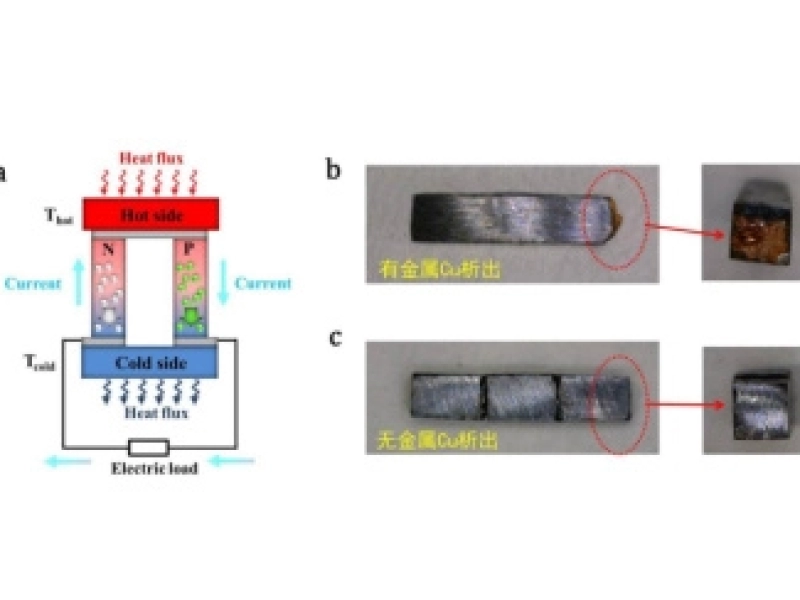
The Shanghai Institute of Ceramics has achieved significant innovative progress in the study of service stability of quasi-liquid thermoelectric materialsJuly/25/2018
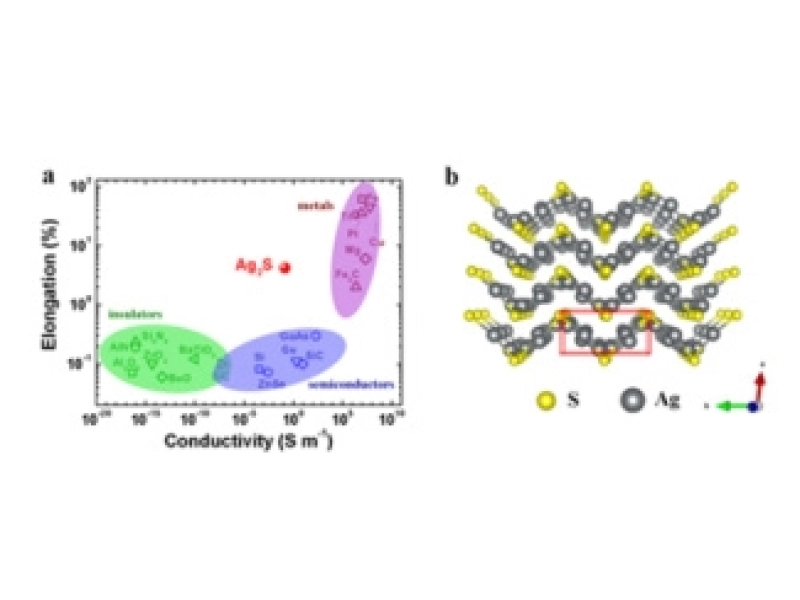
The Shanghai Institute of Ceramics has discovered a semiconductor material with ductility comparable to that of metalsApril/10/2018
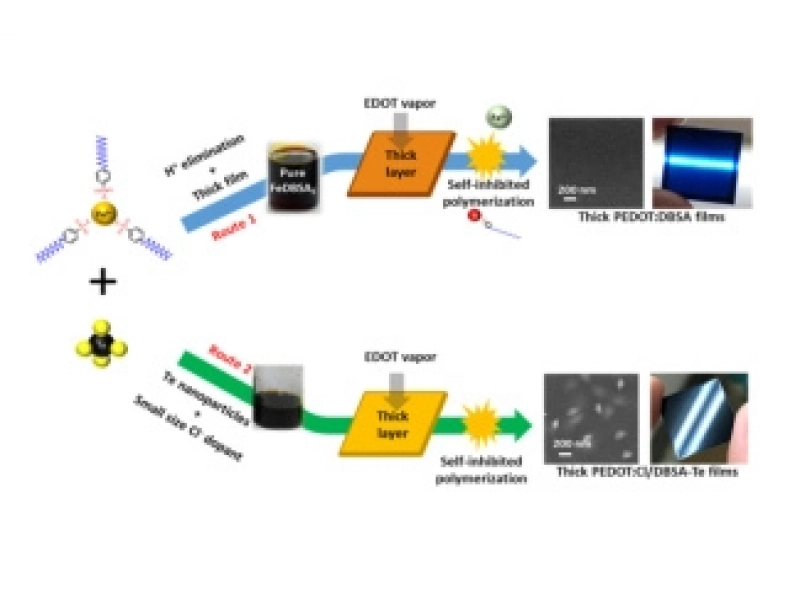
The Shanghai Institute of Ceramics has made significant progress in the field of organic-inorganic composite thermoelectric materialsJuly/17/2018
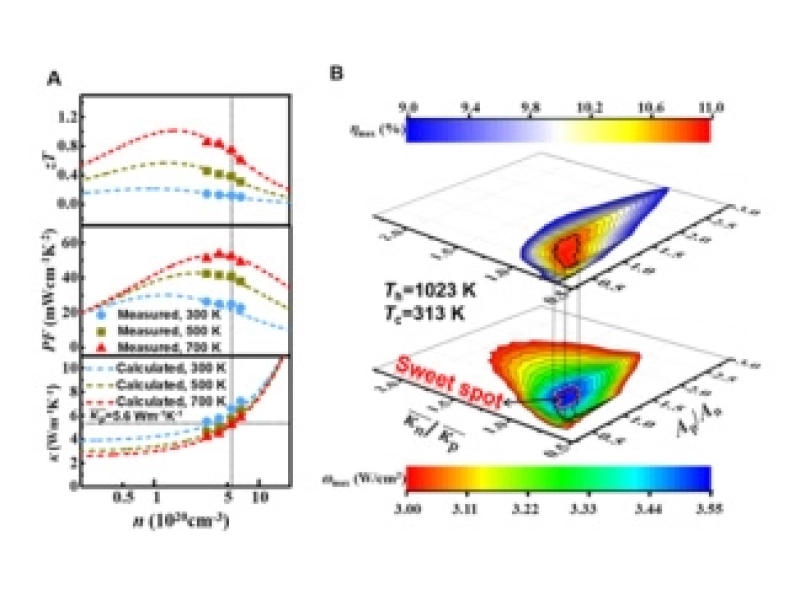
Shanghai Institute of Ceramics Achieves Progress in Thermoelectric Device ResearchSeptember/21/2020
Shanghai Institute of Ceramics Hosts 2022 Annual Exchange and Sharing Meeting for SICCAS Holdings Management Company Portfolio EnterprisesJanuary/25/2023