Open Nav


In recent years, with the proposal and development of several new thermoelectric transport effects and mechanisms, many novel high-performance thermoelectric material systems have been successively discovered. Among these, diamond-like structure compounds, derived from the diamond structure, exhibit lattice distortions due to differences in atomic radii and valence states of their constituent elements, causing the crystal structure to transition from a cubic form to a non-cubic one. The intrinsic low thermal conductivity and tunable electrical properties of diamond-like structure compounds make them promising candidates for exceptional thermoelectric materials. Since 2009, after the thermoelectric research team at the Shanghai Institute of Ceramics, Chinese Academy of Sciences, first reported the thermoelectric properties of the quaternary compounds Cu2CdSnSe4 and Cu2ZnSnSe4, diamond-like structure compounds have attracted widespread attention in the field of thermoelectric research. To date, the thermoelectric properties of more than twenty diamond-like structure compounds have been reported, among which several p-type materials have figure-of-merit values exceeding 1, rivaling those of conventional thermoelectric materials. However, the figure-of-merit values of n-type diamond-like structure compounds generally remain relatively low, severely limiting the development of high-efficiency thermoelectric devices based on these compounds.
Recently, Associate Researcher Qiu Pengfei, Researcher Shi Xun, and Researcher Chen Lidong from the Shanghai Institute of Ceramics, Chinese Academy of Sciences, in collaboration with Professor Yang Jiong from Shanghai University, successfully discovered a high-performance n-type diamond-like compound AgInSe2 that exhibits intrinsically ultra-low lattice thermal conductivity and tunable electrical properties. At 900 K, the highest thermoelectric figure of merit for AgInSe2-based compounds reached 1.1, comparable to that of the best p-type diamond-like compounds reported so far (such as CuGaTe2 and CuInTe2). Building on this discovery, thermoelectric devices based on diamond-like compounds were fabricated for the first time, demonstrating promising application prospects.
The bandgap of AgInSe2 is approximately 1.2 eV, and previous studies on AgInSe2 have mainly focused on its applications in the optoelectronic field. This work has revealed that AgInSe2 exhibits a lattice thermal conductivity significantly lower than that of other diamond-like compounds. At room temperature, the lattice thermal conductivity of AgInSe2 is only 0.99 W m⁻¹ K⁻¹, comparable to that of amorphous glass. First-principles calculations show that the phonon spectrum of AgInSe2 contains a large number of low-frequency optical branches, which strongly scatter lattice phonons with frequencies close to their own—this is the fundamental reason behind AgInSe2's exceptionally low lattice thermal conductivity. Further investigation indicates that these low-frequency optical branches originate from the cooperative vibrations of "Ag-Se clusters." In the crystal structure of AgInSe2, Ag and Se are bonded by strong chemical bonds, whereas the chemical bonds between In and these two atoms are relatively weak. Consequently, Ag and Se can form "Ag-Se clusters" with substantial overall mass, yet these clusters experience weaker binding forces, resulting in low phonon vibration frequencies. On the other hand, by introducing Se vacancies into AgInSe2 or doping Ag sites with Cd, it is possible to achieve an order-of-magnitude increase in the material's electrical conductivity. Preliminary studies suggest that the thermoelectric figure of merit of AgInSe2 compounds containing a small number of Se vacancies reaches 1.1 at 900 K.
Based on the high-performance n-type AgInSe2 compound and the p-type CuInTe2-based compound previously reported by this research team (J. Mater. Chem. A, 2016, 4, 1277), the team has for the first time fabricated thermoelectric devices featuring a diamond-like structure with two pairs of thermoelectric couples. Using electroplating and brazing techniques, Ni electrodes were successfully connected to the cold end and Mo-Cu electrodes to the hot end of the thermoelectric couples. Preliminary test results show that, under a temperature difference of 520 K, the device achieves a maximum output power of 0.06 W. If the contact resistance and contact thermal resistance at the device interfaces can be further optimized, its performance will be further enhanced.
The relevant research findings were published in the journal Advanced Science (DOI: 10.1002/advs.201700727). The research was supported and funded by the National Natural Science Foundation of China, the Key Deployment Project of the Chinese Academy of Sciences, the Shanghai Outstanding Discipline Leader Program, and the Youth Innovation Promotion Association of the Chinese Academy of Sciences.
Article link: http://onlinelibrary.wiley.com/doi/10.1002/advs.201700727/full

Thermoelectric figure of merit of n-type AgInSe2 diamond-like structure compound. (b) The first thermoelectric device based on a diamond-like structure compound.

Phonon spectrum of the n-type AgInSe2 diamond-like structure compound and (b) lattice thermal conductivity.
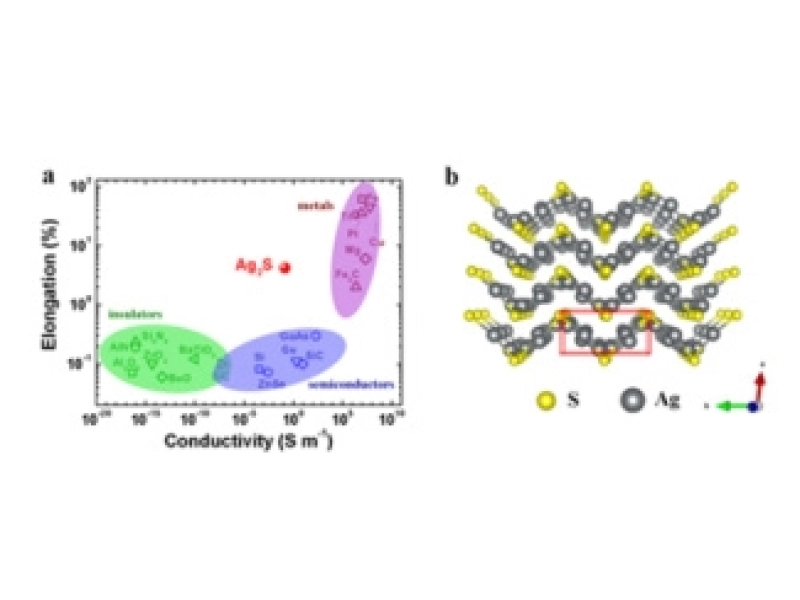
The Shanghai Institute of Ceramics has discovered a semiconductor material with ductility comparable to that of metalsApril/10/2018
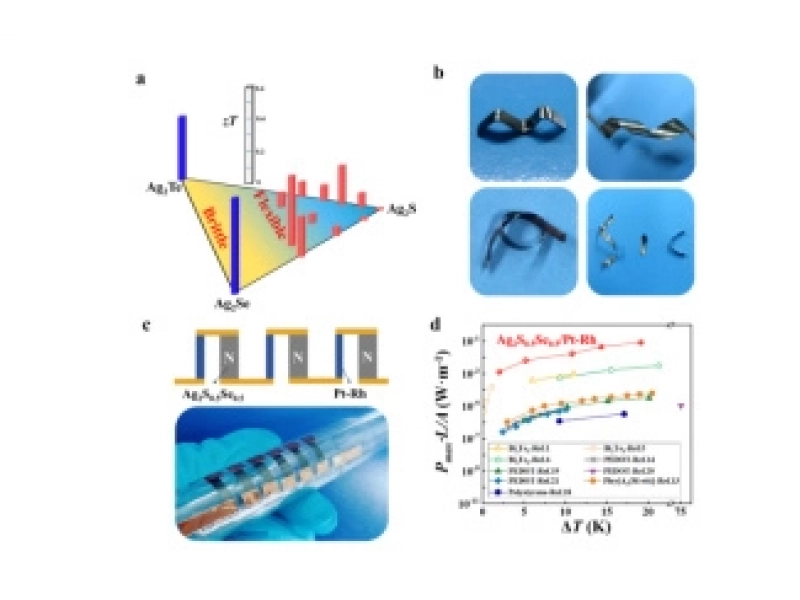
Shanghai Institute of Ceramics Opens a New Research Direction in Inorganic Flexible Thermoelectric MaterialsSeptember/10/2019
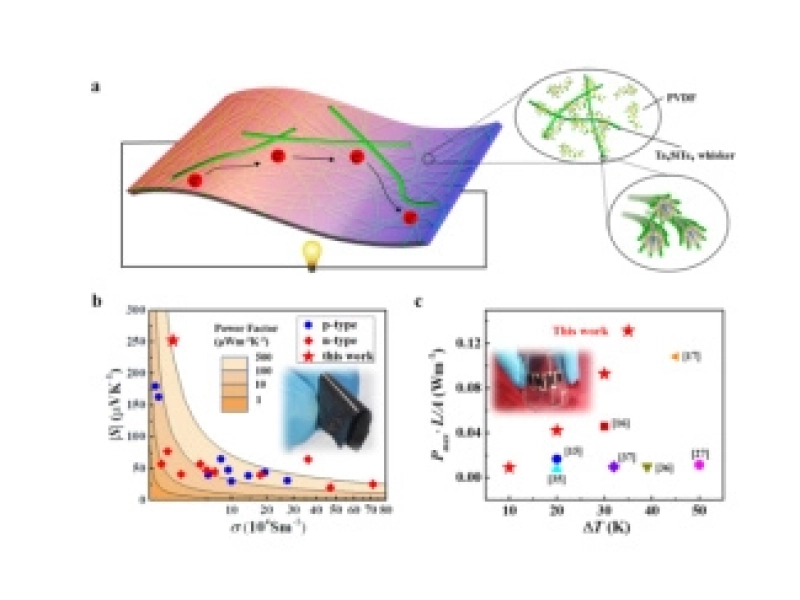
Shanghai Institute of Ceramics Achieves Major Progress in Flexible Organic/Inorganic Thermoelectric CompositesMay/26/2020
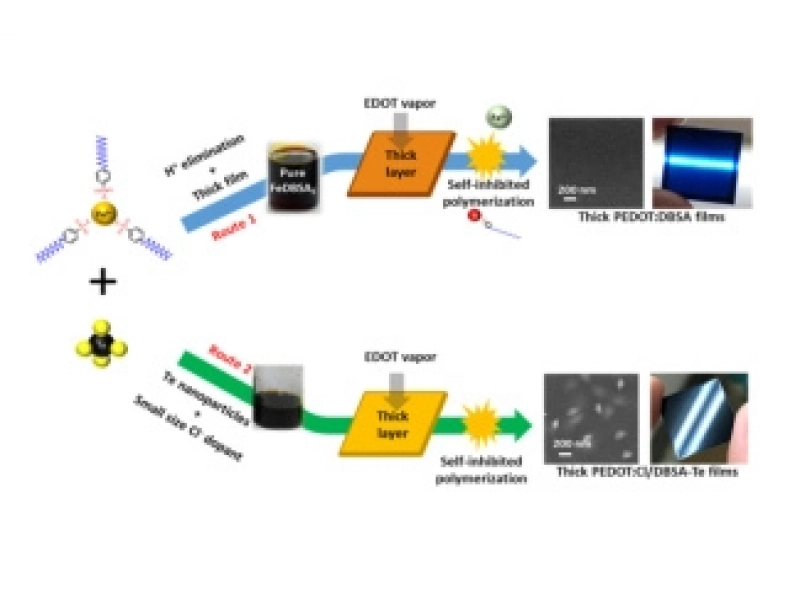
The Shanghai Institute of Ceramics has made significant progress in the field of organic-inorganic composite thermoelectric materialsJuly/17/2018
Unlock the forefront of the industry! CASBOSON invites you to the Canton Fair for in-depth exchanges.October/16/2025